43 how to read australian food labels
How to Read Food Labels - Dr Lockie's Blog - Dr Phil Lockie Both labels have a second column telling you how much sugar is in 100g of their cereal, allowing you to compare products easily. When you do this, it's instantly clear that Cereal A has 16.7g sugar per 100g and Cereal B has 21.1g. Be vigilant about how many servings you're eating. What's on a food label | NSW Food Authority How to read a label What's on a food label What's on a food label Food name The name of a food must be sufficient to indicate its true nature. For example, 'fruit yoghurt' should contain fruit. If it is fruit flavouring, the product should say 'fruit flavoured yoghurt'. For more visit FSANZ.
Food label reading guide | Nutrition Australia The Health Star Rating is a front of pack labelling scheme which can be used to make healthier food choices at a glance. The rating range is from ½ - 5 stars and the more stars, the healthier the choice. Recommended minimum star ratings for food and drink categories Remember: Reading food labels can help us make healthy choices.

How to read australian food labels
Labelling poster - how to read food labels - Food Standards This interactive resource explains the food labelling requirements set out in the Food Standards Code and what that information means. Click on the numbers to find out more about food labelling. A useful poster is also available. You can download a copy here (PDF 372KB), or for a printed A2 version please email information@foodstandards.gov.au. Food labels: How to read and decipher the fine print Labels must show the name of the food, the business address and the batch or lot identification of the food. The regulator is specific here. This yoghurt would have to be called "strawberry-flavoured yoghurt" if it didn't contain any real fruit. 4. Allergy and intolerance information How to read a food label - Healthy Kids How to read a food label - Healthy Kids. Username. Password. Enter something special: Remember Me. Lost your password? Home > Kids zone > High school > How to read a food label.
How to read australian food labels. Understanding food labels: How to read Australian nutritional ... Under FSANZ rules, these labels must reveal how much of the following is in the product: Energy (in kilojoules or both kilojoules and calories) Protein Fat Saturated fat Carbohydrates Sugars Sodium (salt) These contents must show average amount per 100g (or 100ml for liquids) and per serving. A breakdown of what's on nutrition labels Your easy guide to reading and understanding food labels The Health Star Rating is calculated using: Energy (kilojoules). Nutrients to limit - saturated fat, sodium (salt) and sugars. Positive nutrients - dietary fibre, protein and fruit, vegetable, nut and legume content. Because Health Star Ratings are designed to judge similar food products, comparing different kinds of foods will not give ... How to read food labels | healthdirect Sugar: Sugar is a type of carbohydrate. It is better to choose healthier carbohydrates and to limit foods that are high in added sugars. Fibre: High fibre foods such as wholegrain bread and cereals improve digestion and help you to feel full. Sodium: This tells you how much salt the product contains. Eating too much salt is linked to high blood pressure and can lead to heart disease, stroke ... How to read a food label - studentwellbeinghub.edu.au How to read a food label . Find concise information for secondary school students about how to read a food label in terms of the fat, sugar and sodium content of a food or drink. ... Funded by the Australian Government Department of Education, Skills and Employment.
Dairy-Free: How to read food labels - thedietitian If you are dairy free, reading labels is a must. It would be easier if by law Australian companies had to have a clear allergen statement- but this is not the case. ... Dairy-Free: How to read food labels. Updated: Jun 4, 2021. If you are dairy-free, reading labels is a must. It would be easier if by law Australian companies had to have a clear ... Reading food labels to avoid food allergies and intolerances In Australia, many allergens must be declared on food labels regardless of the amount present. This includes ingredients that may be classed as processing aids e.g. flour used to coat moulds. Allergens that must be declared by law are milk, egg, soy, wheat, fish, seafood, tree nut and peanut. A variety of terms can be used to identify ... 2022 How To Read Nutrition Labels on Your Food Packaging? - RealFit Next up, the label shows you all the nutrients - both macro and micro - present in the food. You should look for foods that have more healthy than harmful nutrients. But how do you find that out? Read my guide below: · Total Sugars Most of what we eat, including carbohydrates, fuel for our body, is a form of sugar. Labelling - Food Standards The Food Standards Code includes the general labelling and information requirements (Chapter 1 of the Code) that are relevant to all foods, and sets out which requirements apply in different situations (for example food for retail sale, food for catering purposes, or an intra-company transfer).
How to read a label | NSW Food Authority How to read a label Nearly every food product requires a label with specific information that tells us what's in it, how to handle it, and where it has come from, to help us make healthy and safe food choices. See Labels & the law for a list of everything that should be included on a food label. Ingredients & Nutrition PDF Food label reading guide - Nutrition Australia • The more stars out of five, the healthier the food or drink choice. Food labels Reading food and drink labels can help us make healthy choices. Food and drink labels will include information about the product, where and when it was made and a statement of ingredients, as well as any warnings or allergen statements. Most food or drink packages How to understand food labels | Eat For Health The Nutrition Information Panel on a food label offers the simplest and easiest way to choose foods with less saturated fat, salt (sodium), added sugars and kilojoules, and more fibre. It can also be used to decide how large one serve of a food group choice or discretionary food would be and whether it's worth the kilojoules. What you Need to Know About Food Labelling | Whole Kids In Australian food labels this is easily deduced by checking each nutrient's weight percentage per 100 gr, which is listed on the right side of the nutrient list. ... in an attempt to make the label easier to read. Ingredients Footnote. The top three listings are its key ingredients, and should give you a good idea of where the products ...
Loving the Green Life: Avoiding Palm Oil
Reading food labels - Food Allergy Education How to read food labels that meet the new PEAL law Under the new PEAL law, common food allergens are to be listed with the plain English name alongside the actual ingredient name. This is shown in the label example below. In the statement of ingredients, declarations must: Be in bold font. Have bold font contrasting distinctly with other text.
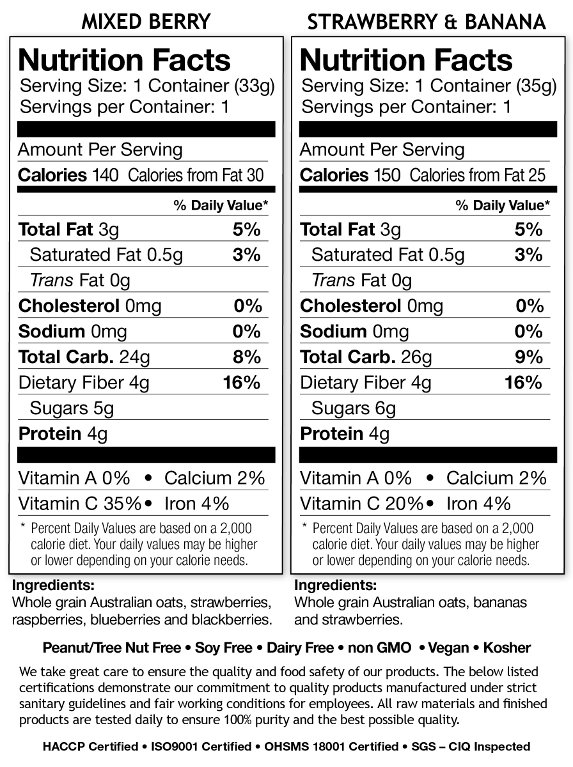
Brothers-All-Natural(R) Introduces Fruit And Oats, the Oatmeal Breakfast Cereal with 50% Whole ...
How to Read Food Labels & Understand Nutrition Info Panel | Better ... Nutrition Australia states that 460-920g daily value of sodium is adequate for our health. That equates to 1.15-2.3g of salt per day. Excess salt consumption raises your blood pressure and hypertension is associated with a higher risk of stroke and heart disease. Keeping your intake to 4g of sodium per day or less is key.

Australian Flag Stencil Two Size Choices
Labelling Guidance - Australian Beverages This mandatory requirement must provide information for both the recommended serving size and per 100mL serving of that product in order to assist consumers in making healthy choices in support of the Australian Dietary Guidelines. You will also find the following information on food labels: Product name. Brand name. Ingredient list.
Post a Comment for "43 how to read australian food labels"